
The structural characteristics of potassium nitrate (KNO₃) are mainly reflected in its crystal structure, chemical bonds, and ionic composition.
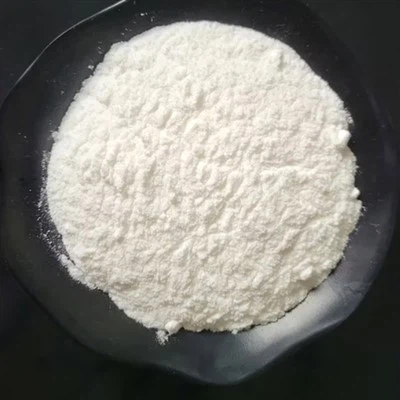
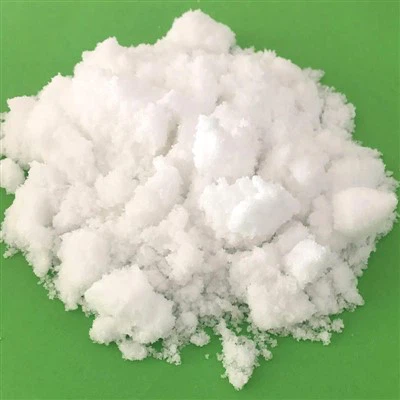
Crystal Structure: At room temperature, potassium nitrate forms colorless, transparent orthorhombic or rhombic crystals, and sometimes exists as white granules or crystalline powder. Its crystal structure belongs to the orthorhombic crystal system, composed of potassium ions (K⁺) and nitrate ions (NO₃⁻) arranged in a 1:1 ratio.
Ionic Composition: As a typical ionic compound, potassium nitrate is formed by positively charged potassium ions (K⁺) and negatively charged nitrate ions (NO₃⁻) bonded together by electrostatic interactions (ionic bonds). In the solid state, these ions are fixed in the crystal lattice; when dissolved in water, they completely dissociate into freely moving K⁺ and NO₃⁻ ions. The nitrate ion structure: Within the nitrate ion (NO₃⁻), the nitrogen atom is covalently bonded to three oxygen atoms, forming a planar triangular structure. This structure can be viewed as a central nitrogen atom forming σ bonds with the three oxygen atoms, along with a delocalized π bond (large π bond), ensuring that the bond lengths and bond energies of the three N-O bonds are completely equal, exhibiting high symmetry.
Physical property correlation: Its crystal structure determines some physical properties, such as easy solubility in water (water molecules effectively disrupt the ionic lattice, and the dissolution process is endothermic, leading to a decrease in solution temperature), insolubility in anhydrous ethanol and diethyl ether (nonpolar solvents cannot effectively solubilize the ion), and slight deliquescentness (the crystal surface can weakly adsorb water molecules from the air).
Furthermore, potassium nitrate does not contain water of crystallization, making it an anhydrous salt. The nitrate ion in its structure endows it with strong oxidizing properties, which is the chemical basis for its use in the manufacture of gunpowder, fireworks, and other applications.